
Criminal Law
Civil Law
Family Law
+3
Special Leave Petition Lawyers in India – Experienced Legal Support for Supreme Court SLP Matters
1 verified special leave petition advocate across India. Compare experience, courts, languages and client ratings, then contact one directly.
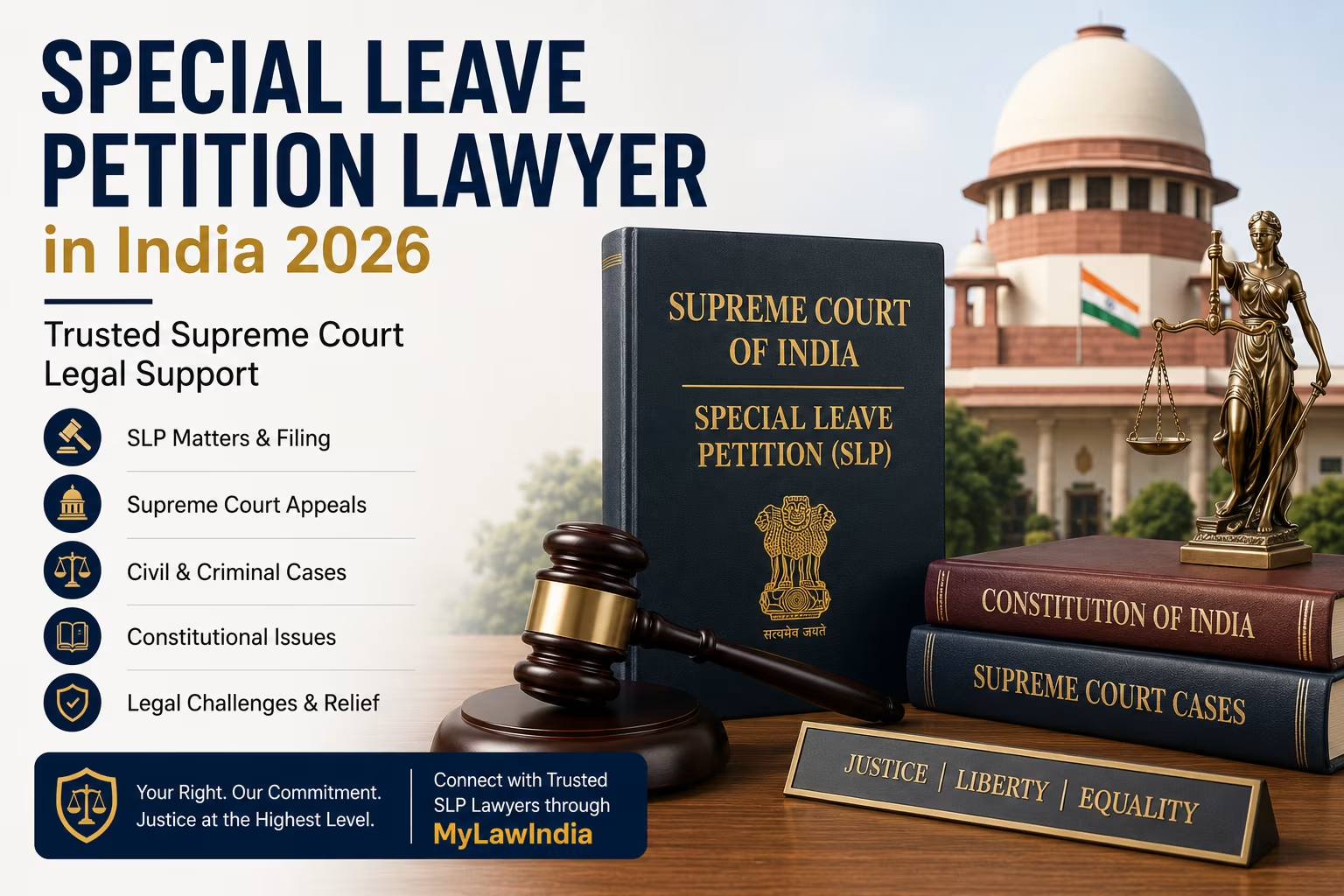
A Special Leave Petition (SLP) is a constitutional remedy through which a party may seek permission from the Supreme Court of India to appeal against a judgment, order, decree, determination, or sentence passed by a court or tribunal. SLP matters can arise from civil, criminal, commercial, constitutional, service, taxation, property, family, and other legal disputes.
In 2026, the constitutional foundation for a Special Leave Petition continues to be Article 136 of the Constitution of India. Article 136 empowers the Supreme Court, in its discretion, to grant special leave to appeal from any judgment, decree, determination, sentence, or order in any cause or matter passed or made by any court or tribunal in India. The constitutional provision does not apply to judgments or orders of courts or tribunals constituted under laws relating to the Armed Forces.
An experienced Special Leave Petition lawyer can assist individuals, businesses, organisations, and other parties in assessing whether an SLP may be an appropriate remedy. Legal assistance can include reviewing the judgment or order being challenged, identifying substantial legal or constitutional issues, examining the procedural history, preparing the petition and supporting documents, and representing the petitioner before the Supreme Court.
An SLP is not simply another automatic appeal. Article 136 gives the Supreme Court discretionary jurisdiction to decide whether special leave should be granted. Therefore, careful examination of the judgment, legal issues, factual findings, procedural history, and grounds proposed in the petition can be important before approaching the Supreme Court.
An SLP lawyer can assist with matters arising from judgments of High Courts and orders of other courts or tribunals where the constitutional requirements and applicable Supreme Court procedure permit an SLP. Depending on the underlying dispute, the matter may concern civil litigation, criminal proceedings, family disputes, commercial disputes, taxation, service matters, property disputes, constitutional questions, or other areas of law.
Preparation of an SLP generally requires careful organisation of the relevant case record. The judgment or order challenged, pleadings, evidence, applications, previous orders, grounds of challenge, and other relevant documents may need to be reviewed to formulate the appropriate legal grounds. A lawyer can also advise on connected applications, including applications for interim relief or stay where appropriate.
SLP proceedings can involve complex questions concerning maintainability, limitation, jurisdiction, procedural requirements, grounds of challenge, and the discretionary nature of the Supreme Court's jurisdiction. The appropriate legal strategy depends on the facts and procedural history of the individual matter.
In appropriate circumstances, an SLP may provide a route to seek appellate consideration by the Supreme Court after an adverse judgment or order. However, filing an SLP does not by itself mean that the Supreme Court will grant special leave or that the challenged order will automatically be stayed. The available relief depends on the circumstances and orders passed by the Court.
MyLawIndia helps individuals, businesses, organisations, and other clients find suitable Special Leave Petition lawyers for Supreme Court matters. You can explore lawyer profiles and connect with an SLP lawyer based on your requirements, location, legal issue, and the nature of the judgment or order being challenged.
1 advocate
A Special Leave Petition can involve important questions of law, constitutional principles, procedural requirements, and the discretionary jurisdiction of the Supreme Court. Careful review of the judgment or order and the underlying case record can be important when deciding whether to pursue an SLP.
If you are looking for a Special Leave Petition lawyer in India, MyLawIndia makes it easier to explore experienced legal professionals who handle SLP matters before the Supreme Court, civil and criminal SLPs, constitutional matters, commercial disputes, service matters, family disputes, taxation cases, property matters, and other appellate proceedings. Review suitable lawyer profiles and connect with a qualified SLP lawyer to discuss your specific situation, understand your legal options, and take an informed step toward addressing your Supreme Court matter.
Frequently Asked Questions
A Special Leave Petition is a petition seeking permission from the Supreme Court to appeal against a judgment, decree, determination, sentence, or order passed by a court or tribunal. The Supreme Court's power to grant special leave is provided under Article 136 of the Constitution.
An SLP lawyer assists with matters involving the Supreme Court's special leave jurisdiction. This may include reviewing the challenged judgment or order, identifying appropriate grounds, preparing the petition and supporting documents, filing the matter, and representing the client in the Supreme Court.
Depending on the circumstances and applicable law, a party may seek special leave from the Supreme Court against a judgment or order of a High Court. Article 136 confers discretionary power on the Supreme Court to grant special leave to appeal from judgments and orders of courts and tribunals in India, subject to the constitutional limitations provided in the Article.
No. Filing an SLP does not by itself mean that the challenged judgment or order is automatically stayed. Where appropriate, a party may seek interim relief or a stay from the Supreme Court, and the Court decides such applications according to the circumstances of the case.
You can explore Special Leave Petition lawyer profiles on MyLawIndia and consider factors such as relevant experience, practice area, location, and available profile information. You can then connect with a suitable SLP lawyer to discuss your Supreme Court matter, challenged judgment or order, appellate issue, or other legal concern.