Arbitration
Bankruptcy / Insolvency
Breach of Contract
+8
Trademark & Copyright · Bangalore
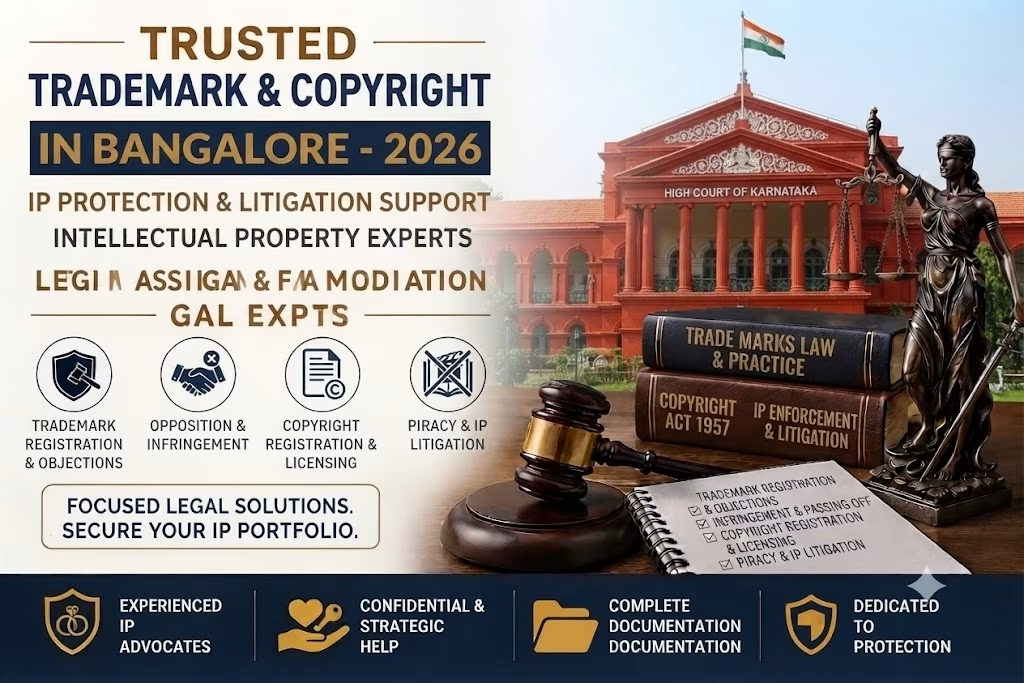
Trademark & Copyright Lawyers in Bangalore – Strong Legal Protection for Brands and Creative Rights
49 verified trademark & copyright advocates practising in Bangalore. Compare experience, courts, languages and client ratings before you make contact.
Trademark and copyright rights are important intellectual property assets for businesses, startups, creators, artists, software companies, publishers, designers, agencies and other organisations operating in Bangalore. A business may invest substantially in developing its brand name, logo, packaging, marketing identity and online presence, while creators may develop original software, photographs, artwork, written material, music, videos, website content and other copyrightable works. Unauthorised use of these assets can create commercial losses, confusion in the market and disputes over ownership or permitted use.
Trademark & Copyright Lawyers in Bangalore assist businesses and individuals in protecting these rights under the applicable intellectual property laws. The Trade Marks Act, 1999 provides the statutory framework for registration and protection of trademarks for goods and services and for preventing fraudulent use of marks. The Copyright Act, 1957 governs copyright protection in original literary, dramatic, musical and artistic works, cinematograph films and sound recordings.
Trademark protection can involve considerably more than filing an application. Before filing, the proposed mark may need to be assessed for distinctiveness, similarity with existing marks and the goods or services for which protection is sought. Selection of the appropriate class and preparation of the application can affect the scope of protection sought.
After an application is filed, the applicant may receive an examination report raising objections. A Trademark Lawyer in Bangalore can assist with reviewing the objection, preparing an appropriate response and representing the applicant through the relevant stages of the registration process. Where a trademark application is opposed by a third party, the matter may require a detailed response, evidence and legal submissions.
Registered trademark owners may also face infringement, passing off, counterfeiting or unauthorised commercial use of their marks. Enforcement can involve notices, settlement discussions, civil proceedings and appropriate interim relief. Online businesses may additionally face unauthorised use of brand names in websites, marketplace listings, social media accounts, advertisements and digital content.
Copyright disputes have a different legal foundation. Copyright generally protects the expression of an original work rather than an abstract idea. A dispute may concern unauthorised reproduction, publication, adaptation, communication to the public, distribution or other restricted acts, depending on the nature of the work and the rights involved.
Copyright issues are particularly relevant in Bangalore's technology, advertising, media, entertainment, software, design and content sectors. Software code, website material, photographs, graphics, videos, written content and other creative works can become the subject of ownership, licensing or infringement disputes.
Copyright registration can also provide an important evidentiary record concerning the particulars of a work. The Copyright Act provides for registration and recognises entries in the Register of Copyrights as prima facie evidence of the particulars entered in the register.
Ownership and licensing are equally important. Businesses frequently engage employees, freelancers, agencies, developers, designers, photographers and other independent creators. Agreements should clearly address ownership, permitted use, assignment, licensing, confidentiality and the scope of commercial exploitation where relevant.
Trademark and copyright disputes can sometimes overlap. For example, a logo may involve both trademark and copyright considerations, while a brand dispute involving counterfeit goods may primarily concern trademark rights rather than copyright. A recent 2026 Karnataka High Court decision arising from Bengaluru illustrated this distinction by holding that allegations concerning the sale of counterfeit branded goods fell within the Trade Marks Act rather than being treated as copyright infringement on the facts of that case.
The same decision also considered the statutory safeguards governing search and seizure in trademark offences, highlighting the importance of following the procedure prescribed under the Trade Marks Act.
For businesses and creators in Bangalore, early legal assessment can therefore help distinguish between trademark, copyright and related intellectual property rights and identify the appropriate method of protection or enforcement.
Trademark & Copyright Legal Services in Bangalore
Trademark & Copyright Lawyers in Bangalore can assist with:
- Trademark searches and legal assessment
- Trademark registration
- Trademark examination objections
- Trademark oppositions
- Trademark applications
- Trademark renewal
- Trademark assignment and licensing
- Trademark infringement disputes
- Passing off actions
- Counterfeit brand disputes
- Copyright registration
- Copyright ownership disputes
- Copyright infringement matters
- Copyright licensing and assignment
- Digital copyright disputes
- Online content infringement
- IP notices and enforcement
- Intellectual property litigation
Trademark Registration in Bangalore
Trademark registration provides statutory protection for eligible marks used in connection with goods or services.
Legal assistance can include mark assessment, classification, application preparation, examination responses and representation during the registration process.
Trademark Search and Clearance
A search before filing can help identify identical or deceptively similar marks and potential registration risks.
The proposed mark, relevant classes and existing registrations or applications should be examined before investing heavily in branding.
Trademark Objection
An examination report may raise objections concerning registrability or other statutory requirements.
A Trademark Lawyer in Bangalore can analyse the objection and prepare a reasoned response supported by relevant facts and documents.
Trademark Opposition
A third party may oppose a trademark application during the prescribed opposition process.
The applicant may need to file a counterstatement and respond through the subsequent stages of the opposition proceeding.
Trademark Infringement
Unauthorised use of a protected trademark can lead to infringement proceedings where the statutory requirements are satisfied.
Legal action may seek appropriate injunctions and other relief depending on the facts of the dispute.
Passing Off
Passing off protects commercial goodwill against misrepresentation that causes or is likely to cause damage.
It can be particularly relevant where a business claims rights based on established market use even when registration issues arise.
Trademark Assignment and Licensing
Trademark rights may be assigned or licensed subject to the applicable legal requirements.
Agreements should clearly define the rights granted, permitted use, territory, duration and commercial conditions.
Counterfeit Trademark Disputes
Counterfeit products may use marks without authorisation to create an association with the genuine brand.
Trademark enforcement can involve civil proceedings and, where applicable, criminal remedies under the governing law.
Copyright Registration
Copyright registration can be pursued for eligible literary, dramatic, musical and artistic works, cinematograph films and sound recordings.
The registration process requires appropriate information and documentation concerning the work and claimant.
Copyright Infringement
Copyright disputes may concern unauthorised reproduction, distribution, communication, adaptation or other restricted use of protected works.
The precise rights involved depend on the nature of the work and the circumstances of the alleged infringement.
Software Copyright
Software and computer programmes can raise important copyright ownership and licensing issues.
Businesses should carefully document development arrangements and the rights acquired from employees, developers, vendors and contractors.
Website and Digital Content Copyright
Website text, graphics, photographs, videos, software and other original digital material may be subject to copyright protection where the statutory requirements are satisfied.
Unauthorised copying can lead to enforcement or dispute-resolution proceedings.
Copyright Licensing and Assignment
Creators and businesses may transfer or permit the use of copyright through assignments and licences.
The agreement should clearly identify the work, rights granted, duration, territory and permitted commercial use.
Online Trademark and Copyright Infringement
IP infringement increasingly occurs through websites, social media, digital advertising and online marketplaces.
Evidence of the unauthorised use should be preserved before initiating enforcement measures.
Intellectual Property Notices
A legal notice can communicate the rights claimed, identify the alleged infringement and demand appropriate corrective action.
Depending on the dispute, settlement negotiations may follow before formal litigation.
IP Litigation in Bangalore
Intellectual property disputes may require proceedings before the appropriate competent court or forum.
The Karnataka High Court at Bengaluru has also dealt with intellectual property-related criminal proceedings, including a 2026 case involving alleged counterfeit branded goods and the distinction between trademark and copyright offences.
Trademark and Copyright Evidence
Important evidence may include registration certificates, applications, invoices, advertisements, original files, development records, licensing agreements, correspondence, website records and screenshots.
Digital evidence should be preserved carefully so that its authenticity and relevance can be established when required.
Why Choose Professional Trademark & Copyright Legal Assistance?
Trademark and copyright disputes require careful identification of the intellectual property right involved and the remedy available under the applicable law.
Professional legal assistance can help with:
- Trademark registration strategy
- Examination objections
- Trademark opposition
- Infringement and passing off
- Copyright registration
- Copyright infringement
- Licensing and assignment
- Counterfeit product disputes
- Online IP infringement
- Legal notices
- Intellectual property litigation
A focused IP strategy can help businesses and creators protect their brands and original works while responding effectively when unauthorised use occurs.
49 advocates
Arbitration
Bankruptcy / Insolvency
Breach of Contract
+8
Child Custody
Court Marriage
Divorce
+8
Anti Corruption
Anticipatory Bail
Arbitration
+7
Arbitration
Bankruptcy / Insolvency
Breach of Contract
+8
Bankruptcy / Insolvency
Breach of Contract
Civil
+10
Arbitration
Civil
Court Marriage
+11
Civil
Court Marriage
Divorce
+11
Anti Corruption
Anticipatory Bail
Banking / Finance
+11
Anti Corruption
Arbitration
Cheque Bounce
+10
Arbitration
Cheque Bounce
Civil
+4
Anti Corruption
Criminal
Labour & Service
+3
Anti Corruption
Arbitration
Cheque Bounce
+11
Bankruptcy / Insolvency
Corporate
Patent
+3
Consumer Court
Corporate
Trademark & Copyright
Arbitration
Banking / Finance
Cheque Bounce
+12
Documentation
Landlord/Tenant
Property
+3
Breach of Contract
Documentation
Trademark & Copyright
Consumer Court
Criminal
Divorce
+2
Bankruptcy / Insolvency
Breach of Contract
Cheque Bounce
+7
Anti Corruption
Arbitration
Civil
+14
Breach of Contract
Consumer Court
Corporate
+6
Bankruptcy / Insolvency
Breach of Contract
Corporate
+7
Anti Corruption
Anticipatory Bail
Cheque Bounce
+12
Load more advocates
Showing 24
of 49
Browse by practice area in Bangalore
All Bangalore lawyers
Criminal (449)
High Court (435)
Family (422)
Divorce (371)
Civil (363)
Pocso Act (360)
Pmla (355)
Anti Corruption (353)
Domestic Violence (348)
Dowry Case (337)
Property (334)
Anticipatory Bail (324)
Litigation (309)
Court Marriage (300)
Cheque Bounce (276)
RERA (226)
Succession Certificate (211)
NCLT (206)
Consumer Court (177)
Documentation (163)
Labour & Service (146)
Women (138)
Corporate (136)
Child Custody (101)
Arbitration (100)
Recovery (98)
Motor Accident (87)
Fraud Case (79)
Breach of Contract (79)
Banking / Finance (72)
Bankruptcy / Insolvency (67)
Media and Entertainment (62)
Cyber Crime (61)
Landlord / Tenant (59)
Wills / Trusts (57)
Startup (37)
Patent (31)
Medical Negligence (26)
Tax (26)
GST (23)
Muslim Law (20)
International Law (15)
Supreme Court (14)
Customs & Central Excise (12)
NRI (11)
Insurance (11)
R.T.I (10)
Immigration (7)
Armed Forces Tribunal (1)
Trademark and copyright protection is particularly important for businesses and creators operating in Bangalore's technology, startup, advertising, software, media, design, entertainment and digital sectors. A valuable brand or creative work can be commercially exploited by others if appropriate ownership, registration, licensing and enforcement measures are not considered at the right stage.
Trademark & Copyright Lawyers in Bangalore assist clients with both preventive protection and disputes involving unauthorised use. The first step is identifying the nature of the intellectual property involved. A brand name, logo or business identifier may primarily raise trademark issues, while an original article, photograph, software programme, video, illustration, musical composition or other protected work may raise copyright questions. Some assets can involve more than one form of intellectual property protection.
Trademark registration requires attention to the proposed mark and the goods or services for which protection is sought. A preliminary search can identify potentially conflicting marks and help assess whether the proposed mark presents obvious registration risks. Selecting the appropriate class and accurately preparing the application can also be important to the protection sought.
If the Trade Marks Registry raises an objection, the applicant may need to provide a reasoned response addressing the specific grounds raised. A generic response may not adequately address the legal or factual issue identified in the examination report. Where another party opposes the application, the dispute can progress through pleadings, evidence and submissions.
Trademark owners also need to monitor unauthorised use after registration. A competing business may use a similar name, logo, label, packaging or other brand element. Counterfeit products can create an additional risk because consumers may associate inferior goods with the genuine brand. Depending on the circumstances, the owner may consider civil enforcement, criminal remedies or negotiated resolution.
Passing off is another important area of trademark-related protection. It can become relevant where a business seeks to protect goodwill against misrepresentation and resulting damage. The factual evidence of goodwill, similarity, misrepresentation and damage can become important in such disputes.
Copyright protection requires a different analysis. The Copyright Act, 1957 covers specified categories of original works, including literary, dramatic, musical and artistic works, cinematograph films and sound recordings.
For Bangalore's software and technology businesses, copyright ownership can become especially important. Companies may engage developers, designers, agencies and independent contractors to create software, website content, graphics, documentation and marketing material. Contracts should clearly establish who owns the resulting intellectual property and what rights each party receives.
Copyright disputes can arise when content is copied from websites, social media pages, publications, advertisements or other digital platforms. Photographs, videos, illustrations, articles, software code and other original works may be reproduced without authorisation. The rights involved and the appropriate remedy depend on the particular work and the circumstances of its use.
Copyright registration can also be relevant from an evidentiary perspective. The Copyright Act provides for a Register of Copyrights, and entries in the register are treated as prima facie evidence of the particulars recorded there.
Licensing and assignment should also be addressed carefully. A creator may permit a company to use a work without transferring complete ownership, while an assignment may transfer specified rights subject to the terms of the agreement. The agreement should therefore clearly identify the work, rights transferred or licensed, duration, territory and permitted uses.
Digital businesses face additional enforcement challenges. A copied photograph, software component, logo, product listing or marketing creative can be reproduced across several websites and social media accounts within a short period. Preserving evidence of the original work and the alleged unauthorised use can therefore be important before sending notices or commencing proceedings.
Trademark and copyright claims should not automatically be treated as interchangeable. A recent Karnataka High Court decision in a Bengaluru matter involving alleged counterfeit branded apparel specifically considered whether the allegations constituted copyright offences or trademark offences. The Court held on the facts before it that the alleged sale of counterfeit branded goods attracted the Trade Marks Act rather than the cited copyright provisions.
The same 2026 decision also addressed statutory requirements concerning search and seizure in trademark-related criminal investigations. This demonstrates why the correct classification of an IP dispute can matter not only for the substantive rights involved but also for the procedure followed by enforcement authorities.
Businesses should also maintain records supporting their intellectual property rights. Trademark applications and registrations, invoices, advertising material, sales records, packaging, licensing agreements and evidence of market use can become relevant in trademark disputes. Copyright owners should preserve original source files, creation records, contracts, publication records and other evidence showing authorship or ownership.
When infringement is discovered, immediate action should be proportionate to the circumstances. In some cases, a legal notice and negotiated settlement may resolve the dispute. In other situations, particularly where continued infringement threatens substantial commercial harm, court proceedings and urgent interim relief may need to be considered.
An effective intellectual property strategy should therefore cover the entire lifecycle of the asset: creation, ownership, registration, licensing, monitoring and enforcement. This approach can help businesses avoid preventable ownership disputes and respond more efficiently when infringement occurs.
Trademark & Copyright Lawyers in Bangalore can assist startups, established businesses, creators, agencies, software companies and other rights holders with registration, contractual protection, objections, oppositions, infringement disputes, licensing, enforcement and litigation.
Whether the issue concerns a new brand, a disputed trademark application, copied website content, unauthorised software use, counterfeit products, copied creative material or a broader IP dispute, the appropriate legal response depends on the specific rights involved and the evidence available.
Frequently Asked Questions
They assist with trademark and copyright registration, examination objections, oppositions, infringement disputes, passing off, licensing, assignment, counterfeit goods, digital infringement and intellectual property litigation.
Yes. A search can help identify potentially conflicting marks and assess possible registration risks before an application is filed.
Potentially, yes. Original website material may receive copyright protection depending on the nature of the content and the applicable legal requirements. The available remedy depends on the facts and evidence.
Trademark law primarily protects marks used to distinguish goods or services, while copyright law protects eligible original creative works. The same commercial dispute can sometimes involve different IP rights, so the underlying facts should be examined carefully.
Yes. Depending on the nature of the dispute and the applicable jurisdiction, intellectual property lawyers may assist with appropriate proceedings before the Karnataka High Court and other competent courts or authorities.